
| Sajha.com Archives | |
| Username | Post |
| HahooGuru | Posted
on 23-May-04 07:15 AM
Well, the wrong spelling of my name and surname here in US is terrible and understandable. But, Sthapit families in Nepal should feel / will feel ashamed with with journalists who can not even write a surname that ruled Kathmandu Metropolitan for few years and turned the face of Kathmandu, i.e. widened roads and critiques of Keshav even call him man of demolition. I mean if a journalist (or the team of journalists in Nepalnews.com) can not write correct spelling of Sthapit (its not typographical error, because its typed repeatedly), is not it a frustrating issue? I am unhappy with the blunder. They should express apology towards Sthapit (with those offended by the mis-spelling of surname: twisting) HG Mayor Isthapit, members resign en masse Kathmandu Metropolitan City (KMC) mayor Keshab Isthapit along with deputy mayor Raja Ram Shrestha and 34 ward chairmen resigned Sunday owing to pressures from the Maoists. |
| Badmash | Posted
on 23-May-04 02:47 PM
Well, the people at nepal news should know how to spell his name, given that he has been a mayor for quite sometime. But let's face it, his name is not quite the exact science. It is, after all, a nepali name, and anytime you have to spell it in english, its anybody's guess. I don't know what's the big deal, it is not his birth certificate or anything. |
| aardvarak | Posted
on 23-May-04 03:26 PM
HG I understand how frustrated u are to see sthapit as is-thapis? But I think its alright, After all he eagerly "thapis" the post which was given "tika layera" :-), so peole are saying-is (with body language, two hands streaching and moving down towards crotch) thapis? On a serious note, i really get frustrated to see how easily nepali society can accept the distorted nepali people use in spoken as well as written one. You will have to wait "akhil's bhasan" to hear people using correct grammar and pronunciation :-(. Television is horrible, do not even talk about mushrooming radio especially FMs. I see educated nepali speaking impeccable english, and he would be embarassed if he spoke wrong english. But the rule does not apply to nepali language. You can use the most distorted nepali and still be cool. (actually recently i heard a nepali girl labeling a nepali guy pakhe simply because he spoke correct nepali). I wonder if nepal is the only country where you can distort ur language the way you want and still get away. What are the chances of a brother who says "you was gone" getting an executive position? But in Nepal, the worse nepali you speak, the more sophisticated, elegant, modern and cool u are. One of the beauty of everlasting language is its flexibility. But should not there be some limit to it so that you learn it rather than adapt it to ur own shortcomings? Long ago we abandoned the distinction among three "sa", "sha" and "sha(?)", but i think we should give a little more of ourselves to learn the correct nepali. |
| Nepe | Posted
on 23-May-04 08:03 PM
Aardvarak ji, Eeeees.. thaapis tiko ! Can't think of better exegesis. It also rightly corresponds to what I think what has happened- that, it is not the evil power of the Maoists that forced but the moral lowground of Sthapit ji that did not help him to stay. We certainly needed a demolition man and widening of our narrow streets. Sthapit ji just missed the importance of demolition of the power of Narayanhity and widening of the road of democracy. Khagendra Saugraula had written about his conversation with Sthapit on this very matter in Kantipur recently (hopefully the conversation is real and not imaginative like one with Manjushree Thapa !) And interesting comment on our language culture. Our current national language, Nepangrezi, is getting richer and richer in it's English content. So correct Nepali is still surviving in Akhil's bhasan. Good to know. We indeed had abandoned (or perhaps never adopted) three s' sa/sha/shha ?/ in our spoken language. However, I had seen some news readers volunteering in learning 'em again, perhaps in imitation of Doordarshan or BBC Hindi Service. Has anybody perfected it yet ? Two guys who used to torture me by their SHaing all or most s' missing some sometimes are NTV's Durga Nath and UML's Madhav Nepal. Anybody sharing the same experience ? |
| SITARA | Posted
on 24-May-04 10:27 AM
When phonics get translated into letters of a different language, confusion arises; it is an established fact, not an assumed crime. Here is an interesting article on the phonetic make-up of Indian (Sanskrit origin ?) names: ***** The Trouble With Indian Names by Vikas (or is it Wikas?) Kamat http://www.kamat.com/econtent/amusements/desinames.htm Writers who use the English language to write about India are always faced with a dilemma on how best to spell the Indian names. The Indian languages use a number of letters that have no equivalents in English and even within India, the way they are represented varies from region to region. I have tried to summarize the common problems of writing and pronouncing the Indian names below. Too Many 'H' s Indian languages have the concept of long and short consonants. So, 'sh' and 'shh' are different. (as in Usha and Prakash respectively.) To avoid the confusion, some people eliminate the 'h's altogether, as in 'Siva', and 'Srinivasan', which has only added to the diversity of usage. Siva and Shiva are pronounced in the same way, although spelled differently in English. Compound Consonants Compound consonants are formed by combination of two or more consonants used together as in Jyotsna or Maharashtra.. Two of the compound consonants Ksha and Jnya are in fact, single consonants! Too Many 'T' s and 'D's There are four derivatives of the consonants 't' often transliterated as 'th', 'Th', 't', and 'T' The same is true of the consonant 'd'. Add to it, the compound consonants of 'tt', 'thth', 'ThTh', and 'TT' and you are completely stumped. Of course, to us Indians they are all poles apart and there is no confusion! Too Many Vowels Indian languages also have the long and short vowels for a, e, i, o, u (and then some). So Räma and Ramä, although written the same way, are pronounced in different ways and most importantly mean different -- the former is a male name, and the latter feminine. 'Ru' , 'Um' and "Aha' Vowels These vowels neither have equivalents in English, nor can they be adequately represented. So people write either 'ri' as in Krishna or 'ru' as in Mrudula, both of which render imperfect phonetics. Similarly the pronunciation of 'um' falls in between 'un' and 'um', and is often mispronounced. For example, Sanskrit, Samskrit (or even Sanskrut) all refer to the same name, the ancient language of India. English Names and Indian Names The hundreds of years of foreign rule has given way to new pronunciations and spellings of old names. The river Ganga became the Ganges and Kolkatta became Calcutta. Although Indians have mastered the appropriate use of these nouns -- while referring to geography for instance, the name Ganges may be used, but while referring to her cleansing qualities, the name Ganga is used -- they can totally confuse those not familiar with the Indian culture. Kashi, Varanasi, and Banaras is another example, referring to the same holy city. Joins or the Sandhis The Joins are one of the reasons why Indian literature is so rich and complex. In most languages, one can combine two words to yield a third word (thus, Krishna + Anand = Krishnanand, notice how one 'a' disappeared). What is confusing about the joins are the substitution rules and the syllable on which the emphasis lies. This inherent complexity has enabled the great poets and writers of India to write some of the magnificent works humanity has known, but it is difficult to explain to a foreigner. Trouble within India There are problems with Indian names within India also. Some of the languages lack some of the consonants available in other languages (like 'ch' is invariably substituted for 'sh' in Tamil Nadu, as is 'g' for 'h'). So poet Ravindranath is known in his home state of Bengal as Rabindranath (substitute 'b' for 'v') Tagore. An interesting pattern of writing has been practiced in Tamil Nadu to represent the 'LL' (say Lu but with the tongue making a complete trip from the ceiling of the mouth to its relaxing position; as in Kerala, elagola etc). Since it is different than the conventional 'l' or 'LL' sound, it is written as 'zh'. So now you know the correct way to pronounce the name of our Tamil section, Tamizhakam. Missing 'W' Indian languages typically lack the 'W' sound, and do not distinguish between 'w' and 'v'. So my name is written as Vikas, although Wikas would have been more appropriate. |
| Deep | Posted
on 24-May-04 10:32 AM
Isthapit ra Sthapit ko kuro munasibai jasto bhaye pani khatti kuro ke ho bhane: Kesab sir ahile Bisthapit ho. |
| Mitra 2 | Posted
on 24-May-04 10:58 AM
.. MaHa jodi ko joke 'Where where go water, there there go fish' bhanya jastai hamro sir pani kahile Sthapit hunu parchha ra kaile Bisthapit hunu parchha bhanne sarai janne hunu hundo raichha :) |
| NSShrestha | Posted
on 24-May-04 11:02 AM
Hahoo Nani, Kati Barkha(Barsa) khanu hunchha yo Barkha (Barsa Yam) ma ? Surje(Surya) chadkiyera aye pacchi dimag pani tattienchha. Kasto kasto parasna garnuhunchha. Parkirti(Prakriti) ko Sirjana(Srijana) ho kasle po rokna sakchha ra! Yestai ho Joban (Youban) ma. Got the point? From Sanskrit to Prakrit to Nepali, there has been a subtle changes so either one is valid. Isthapit may not be as Sthapit as Sexpure yet!!! |
| posh | Posted
on 24-May-04 04:51 PM
I found the following news/article quite interesting on the issue of using correct spelling for somebody's name/surname. Copy n Paste source: http://news.bbc.co.uk/1/hi/magazine/3600483.stm 21 spellings of 'Gadaffi' ____________________ To some the Libyan leader is Gaddafi. To others he's Qadhdhaafiy. Why are there so many different spellings of his name? On the streets of Paris, the president is Jacques Chirac. As he is on the streets of London. Schröder is Schröder or perhaps Schroeder. Berlusconi's simply Berlusconi. But Colonel Gaddafi poses a few more problems. In Arabic, the Libyan leader's name is written as follows: The process of transliterating (representing the characters from one alphabet in the closest corresponding characters from another) can give a rich variety of results. Aref Ahmaro, a senior producer at the BBC's Arabic Service, says: "When you translate something, you set out to make it understood to the greatest number of people, and to reflect the way local people pronounce proper names. Spellbound "If you were to write Ghaddafi phonetically as the Libyans pronounce it, you'd end up with something like Qua-th-th. If you started writing that it would confuse people. "Gaddafi is probably the best compromise. Sometimes if you are too strict, you can sound too pedantic," he says But for reference, here are just some of the ways the name can be written, with a note of who uses which one. Gadafi Gadafy - (as used by the Guardian and the Irish Times) Gaddafi - (probably the most common, as used by most newspapers and this website) Gadaffi - (as used by the Financial Times) Ghadaffy - (as used by London's Evening Standard, although not for long) Gadhafi - (as used by the Wall Street Journal) Ghaddafi Ghaddafy Gheddafi Kadafi - (as used by the Los Angeles Times) Kaddafi - (as used by Newsweek) Kazzafi Khaddafi Khaddaffy Qadafi Qaddafi - (as used by the New York Times, the International Herald Tribune, the Economist and the New Yorker) Qadhdhafi Qadhdhaafiy Qathafi Q'udafi Qudhafi |
| HahooGuru | Posted
on 24-May-04 05:00 PM
Here is another Lost in Translation (with due acknowledgement to author): 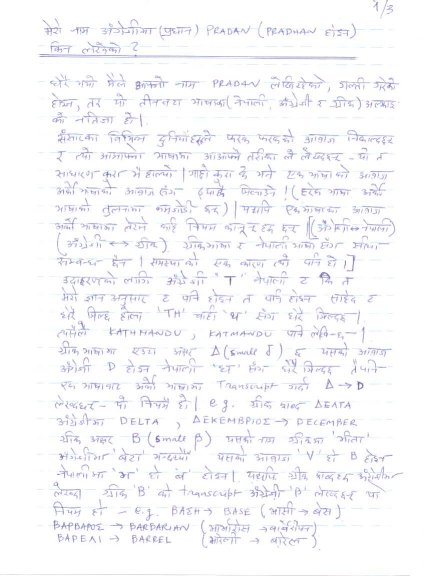
|
| HahooGuru | Posted
on 24-May-04 05:01 PM
Part 2 (Page 2) 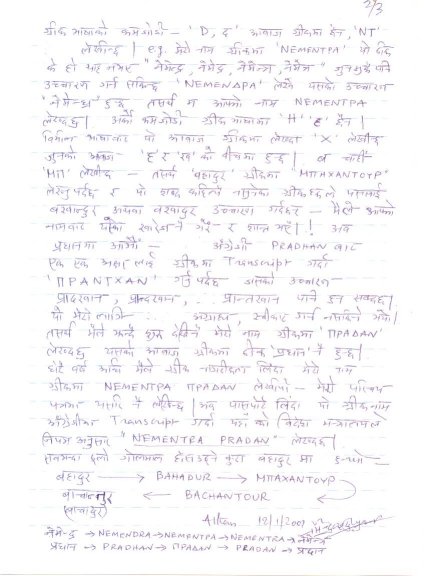
|
| HahooGuru | Posted
on 24-May-04 05:06 PM
If you could not read it directly here then, save and read, its really interesting article: 
|
| HahooGuru | Posted
on 24-May-04 05:08 PM
PAge little bit improved quality. San please remove the first two pictures. Thanks. 
|