
| Sajha.com Archives | |
| Username | Post |
| Paschim | Posted
on 03-Sep-02 09:56 PM
For everyone fascinated by V.S. Naipaul the person, and his works, here's a highly interesting portrayal of him in the New York Times of 1 September. I thank Ashu for bringing this piece to my attention. http://www.nytimes.com/2002/09/01/books/review/01MERKINT.html?ex=1031988346&ei=1&en=ec7406b03f058538 ------- On a side note, I derived a particular pleasure last December discovering together with Niraj Shrestha of DC, Naipaul mentioning in his Nobel acceptance speech in Stockholm that his father's ancestors *could* have come from Nepal. After this, thanks to a friend, Rama, who works for Kantipur, the story got a wider audience in Nepal, which apparently generated some interest there. Naipaul says in the 26th paragraph of his speech: "We made no inquiries about India or about the families people had left behind. When our ways of thinking had changed, and we wished to know, it was too late. I know nothing of the people on my father's side; I know only that some of them came from Nepal. Two years ago a kind Nepalese who liked my name sent me a copy of some pages from an 1872 gazetteer-like British work about India, Hindu Castes and Tribes as Represented in Benares; the pages listed - among a multitude of names -those groups of Nepalese in the holy city of Banaras who carried the name Naipal. That is all that I have." http://www.nobel.se/literature/laureates/2001/naipaul-lecture-e.html |
| Paschim | Posted
on 03-Sep-02 10:03 PM
Here's a piece by a Nepali reviewer on Naipaul's latest novel, "Half a Life", re-published in suskera.com in August. "Naipaul's writing is disarmingly transparent. His protagonist, William Somerset Chandran, has an uncanny resemblance to the author himself. In 1956, Willie, son of a Brahmin and a sister of an untouchable radical from a princely protectorate in India, lands a scholarship at a London college, thanks to his father's comical fame as the man who attracted tourists by keeping a vow of silence. Willie finds the bohemian atmosphere of the immigrant's London in the 50s mildly liberating. He experiments with sex, scorns his closest relations, especially his father, reads Hemingway, and gets published. He then falls in love with Ana, an heiress to an African estate, and follows her to a colony where they spend eighteen uneventful years. The country is unnamed, but the overdone Portuguese pedigree and other clues give it away as Mozambique." http://www.suskera.com/aug2002/half.html |
| paramendra | Posted
on 04-Sep-02 01:56 AM
Timely! I just finished reading Naipaul's A Bend In The River earlier today. I am a Naipaul fan. Ethnic Indian/Nepali. The Global South perspective. His style. The familiarity that glares at you. This feeling that there can be world class literature that talks of things that you did not quite catch with high school literature, most of which had western writers writing about the English countryside. 'The Writer and the World': The Blunt Opinions of a Professional Provocateur "In an age of mandatory multiculturalism and groupthink -- where well-intentioned but stale pieties stand in for close scrutiny on the left, and shrill but defensive assertions parade as rigorous criticism on the right -- it is altogether tonic to have a writer such as V. S. Naipaul in our midst.....he has mocked the very notion of exile, questioning what it means ''in a world of cheap airfares'' where everyone ''can go home.'' .............what many consider to be his best novel, ''A House for Mr. Biswas'' (1961) ...........''He feels his pain, but he is in command.''..........26 books in all, including almost equal amounts of fiction and non-fiction -- over the past 45 years........" http://www.nytimes.com/timestopics/naipaul.html |
| paramendra | Posted
on 04-Sep-02 02:04 AM
The suskera review is wonderful. |
| Paschim | Posted
on 04-Sep-02 02:28 AM
P, I'm sure the Suskera.com reviewer will be pleased to note that. Btw, I have seen you use "the global south" quite frequently. Just curious, what or who is in your understanding the "global south". Is it just a bohemian equivalent of the cliched "developing world", or is it something more? In what way? |
| ebony_firefly | Posted
on 04-Sep-02 02:35 AM
nice and informative... may be in my dreams i will see naipaul not receicing noble prize and entering nepal... something like jean paul satre.. lols.. |
| ebony_firefly | Posted
on 04-Sep-02 10:16 AM
oppps! its jean paul sartre...if i am not mistaken! |
| paramendra | Posted
on 04-Sep-02 01:32 PM
Pachim: The suskera.com reviewer: I am glad for the web. The reviewer might have published the review elsewhere, but we can readily add a link to it, as we did, and let the Sajhaites relish the delicacy. Global South: as a substitute for the term third world or developing countries. Kind of like Negro and African Americans. I feel like the TW and DC terms are loaded. You get this image of countries that are about two to four steps behind the west in everything, when that is not the case. Some African tribes handle the adolescent phase of their lives much better than the West. That would make them "first world" for that particular category! Whereas the term Global South denotes geography without "judging." Asia, Africa, Latin America. Broadly speaking. I prefer it that way. |
| paramendra | Posted
on 04-Sep-02 01:41 PM
Naipaul on the Web VS Naipaul VS Naipaul: An Overview Literature 2001 The New York Times: Nobel Prize Winner VS Naipaul Online NewsHour: VS Naipaul - March 3, 2000 SAJA Roundup: Naipaul TNR Online | The Enigma of Denial by Caryl Phillips VS Naipaul Bio Nobel Lecture 2001. VS Naipaul Sir Vidiadhar Surajprasad Naipaul 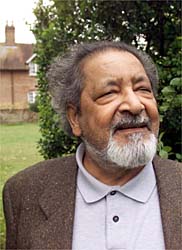
|
| Paschim | Posted
on 04-Sep-02 10:21 PM
PKB the resourceful!! I wonder if the Google search engine is your second wife :) I've long been fascinated by Naipaul (the beautiful prose from an essentially snobbish brown sahib) -- and also his friend turned foe Paul Theroux, whose revealing (if mildly bitter) account of their 30 year long friendship "across three continents" in "Sir Vidia's Shadow" is highly interesting. Like Naipaul's, Theroux's own travel accounts of train journeys across Europe and Asia, published in 1974 as "The Great Railway Bazaar" has been the sole inspiration behind my own modest attempts to travel on train like a mad man whenever I get a chance. In the past 5 years, I've been on the chaotic Karnataka Express from Gorakhpur in UP to Bangalore in the south, then on to Mumbai, Baroda, Delhi, and back to Gorakhpur on the famous Bihari train outbound from Delhi, the evening "Vaishali Express" -- the toy trains from Kalka (Punjab) to Shimla, and the one down to Siliguri from Darjeeling -- and a whole month spent on the fast TGV in France and the rest of Europe's superb railway network…Train journeys, as both Naipaul and Theroux would attest are "prose in motion", and the voyeurs in us, those who like to watch the world go by sitting on the top berth, is just an unrivalled experience. Time Asia actually brought out a great issue on train journeys two weeks ago. It's called "Journey on an Iron Horse" or something like that about train travel through the Western border of Pakistan through the subcontinent, Indochina, China and then onto Mongolia. The BBC too has past documentaries on "The Great Railway Journeys" usually guided by well known personalities like Mark Tully in India, or Clive Anderson from Hong kong, through China, into UllanBattar. Traveling and movement of persons and mind has essentially shaped Naipaul career. As a Naipaul watcher, I have felt that we do better justice to his cranky snobbery if we get on the train too! I have actually been a great fan of VS Naipaul's brother Shiva Naipaul too. Most sadly, Shiva died very young having just published one or two novels (VS's 1987 Enigma of Arrival is dedicated to Shiva posthumously). There's a collection of essays by him, one on his brother Vidya, about growing under his looming shadow and eminence -- it was just one of the most beautiful essays on close human relations I have ever read… People who studied at Budhanilkantha School and know the great Dolpo explorer John Tyson will be pleased to know that Shiva Naipaul, then a young journalist for The Telegraph interviewed John Tyson and published a long feature on Tyson's excursion that led to the scaling of Mt. Kanjiroba in Dolpa in the early 1960s. John Tyson told me later that racism in Britain in the 60s was so pronounced (Paramendra, are you listening?!) in the Oxbridge dominated snobbish broadsheets, that although Shiva Naipaul's superior talents were recognized, he still published some of his pieces under an anglicized name. So Tyson's long feature in the Telegraph in the mid 60s was written by some Mr. Andrew when actually it was the great Vidya's grander brother Shiva who wrote it (Tyson was then Housemaster at Rugby School, but later became Geography master to some of us -- still remember with awe memorizing names of cheese like Roquefort and Impressionist artists like Cezanne and Renoir!) ------ PKB, just saw your trade-related querries in the other thread...will answer them fursad ma. Jaagire pariyo, yesto ganthan garna mann ta laagchha, tara samaya ko paaso is a rude bitch! |
| Biswo | Posted
on 05-Sep-02 12:02 AM
Paramendra, Sometimes I get intimidated by the deluge of website links you often provide. Though it is informative, it evokes trepidation too:-) I am too a fan of Naipaul, and have read a lot of his books in the past. I think about five years ago, most, if not all, of the bookstores (of English books) in Kathmandu used to have his books. His works are very pleasant to read.I liked the classical "Area of Darkness" most however. |
| Achilles | Posted
on 05-Sep-02 07:35 AM
>Paramendra, > >Sometimes I get intimidated by the deluge of >website links you often provide. >Though it is informative, it evokes >trepidation too:-) > >I am too a fan of Naipaul, and have read a >lot of his books in the past. I think >about five years ago, most, if not all, of >the bookstores (of English books) in >Kathmandu used to have his books. His works ^^^^^^ >are very pleasant to read.I liked ^^^^^^^^^^^^^^^^^ Never seen that comment from other readers of Naipaul. Is "An Area of Darkness" a 'pleasure' to read ? Or say 'An Enigma of Arrival' ? You seem to have mistaken Naipaul for Enid Blyton. Naipaul's is dark vision (as the NY Times article says so well ) and save his earlier works (A House for Mr. Biswas, Miguel Street), his works are far from a 'pleasure' to read. Challenging ? Yes. Unsettling ? Definitely. A Pleasure ?--Far from it. >the classical "Area of Darkness" most >however. |
| villageVoice | Posted
on 05-Sep-02 08:18 AM
Tks Paschim for the Naipaul debate. Yes, much like Parmendra, I reveled in the fact that a humble Hindu from a far-away Caribbean had produced a masterpiece in English literature. (The revelation was so powerful that I even briefly flirted with the idea of writing a novel myself. How about a book by a Nepali Hindu, about his early childhood in the Tera,i and later in Kathmandu, about family ties and intrigues, etc, etc. But that's a different story.) To me, Naipaul was at his best in House for Mr. Biswas, and thank goodness, that's was the first book I read of Naipaul's. I think he's never been quite the same since. That brings me to a related thesis about artistic creativity: you don't necessarily become a better writer with more learning and exposure, though definitely a lot wiser. Many artistes were at their creative best, and produced masterpieces in their dark and desperate youth, but lost the early fire after their (commercial) success. Wonder if Arundhati Roy foresaw all this and happily declared she may never write a novel after "God of Small Things"? I am here talking about Naipaul as a writer of fiction. Sure, nonfiction writing, much like journalism, is a different proposition. |
| villageVoice | Posted
on 05-Sep-02 08:35 AM
Paschim, interesting that you talk about "A Great Railway Bazaar." While I enjoyed every bit of that book (including the one where the writer finally finds out that Indian women aren't so mysterious after all. Hope I got it right, I read it a long, long time ago), to me most travel-experiences in India somehow have been a big pain. In India, great things just happened to others; anyone but me, though I had a pretty pleasant time in Goa (cheep booze and beaches helped!) that last time I was there. |
| Digital | Posted
on 05-Sep-02 09:28 AM
Pacchim, There was an Interview of Sir Bidhyadhar Sarju Prashad Nepal on PB with Charlie Rose. before he recieved Nobel Prize. You may find it fascinating. |
| paramendra | Posted
on 05-Sep-02 08:46 PM
Paschim: I would be interested in knowing details of your trip across India. Have you written about it already? Can you share? The sights and sounds. The crowds. The diversity. The bustle. The smell. The filth. The race. The skinny figures. The sweat. The optimism in the most dire situations. I hope to travel all over India myself down the line. The sooner the better. I had not realized you had done it already. As Gandhi said, if you want to see India, travel third class. I doubt you followed in the Mahatma's footsteps though. :-) |
| Paschim | Posted
on 05-Sep-02 09:10 PM
VV: I think you are right -- "Biswas" remains his best -- and he was *under 30* when he wrote it. His first work, The Mystic Masseur, has just been filmed by Merchant Ivory. I wonder if it's been released in the US. On railway travels -- well let me just say, for me it's now a set lifelong passion, thanks to the books of Naipaul and Theroux. I might soon do a trip along the coasts on East Asia…like Theroux, I need to demystify these mysterious women of the orient through train travels. You can't talk to them, but you can still watch! Too bad all we have in Nepal is that short stretch in PKB's home town, and that too, I hear, suffered an accident recently. Achilles has a point…Naipaul *unsettles* you most unpredictably. In his latest "Half a Life" there's a simple paragraph where the protagonist goes to a brothel in London. His whore is rather rude, and after they undress, the woman says to the man, Willie (I'm sure Naipaul himself in his youth), "you can keep your socks on"! I mean, I can think of no other writer who can come up with a thing like that. After reading those 6 words, I just had to put the book down and stare at the ceiling for half an hour…there are many such instances in the rest of the book…his non-fictions make a better (still unsettling) reading though -- liked parts of his trilogy on India: Area of Darkness, Wounded Civilization, and A Million Mutinies. Haven't read his books on Islam, but he's been criticized heavily for those. Digital, thanks for the info. The only TV interview I've seen of him was in BBC some 9 years ago. He is just a cold, rude respondent, and is known to avoid the media like the plague. So anyone who gets to speak to him for a long period has achieved something! In DC last October, I went to a reading and book signing occasion -- and the rule was he'd sign just one book (he rarely signs) per person. I took to him 4 books to sign; he looked up, and while he did sign them all, he clearly didn't look very pleased! Paramendra, as I said to VV, trains are now a passion for me. Haven't had the time or mood to record them all in writing yet, but will do one day -- the memories are too vivid to fear loss. I surely haven't covered all the regions, and want to do a lot more, even repeat some sections -- like haven't touched the eastern coast through Orissa at all. But to savor what you described aptly, take the Karnataka Express from Gorakhpur to Banglaore and on to Madras (two full days and two full nights). I did try the third class when I was going through Madhya Pradesh, after Jhansi -- just to see how it's like -- and let me just say, it was *interesting*. It's my opinion that there are three advices that you shouldn't take of Gandhi-ji: first on celibacy, second on vegetarianism, and the third on train travels :) |
| paramendra | Posted
on 05-Sep-02 11:21 PM
"It's my opinion that there are three advices that you shouldn't take of Gandhi-ji: first on celibacy, second on vegetarianism, and the third on train travels :) " LOL P.S. You have actually met Naipaul in person! I stand impressed. |
| Paschim | Posted
on 06-Sep-02 04:57 AM
Okay, right until this moment, I seriously didn't know what LOL meant. I'd seen it being used many times before, but never bothered to find out, knowing through educated guess though that whatever it meant, it must be harmless. Well, today, I bothered to find out -- and dictionary.com says LOL means 'laughing out loud". Wow. Knowing that I didn't know this great abbreviation until now, I really had to laugh out loud at myself! LOL, indeed :) |
| HahooGuru | Posted
on 06-Sep-02 06:19 AM
I am happy that there is something I knew before you, Paschim. :) HG |
| Paschim | Posted
on 06-Sep-02 06:39 AM
I am happy that you are happy, Gurudev. By the way, was your posting above the SHORTEST comment you have ever posted in your 8 years of cyber existence? Just wondering :) Paschim President, Hahooguru Fan Club (HFC). |
| HahooGuru | Posted
on 06-Sep-02 08:12 AM
Thank you Paschim, TakeCare . -- HG |
| Paschim | Posted
on 06-Sep-02 08:31 AM
Okay, I am now really beginning to worry for Guru-ji -- his immediate remark above is even SHORTER! Japan tira huri-bataas aayeko ta chhaina ni haina? You ARE alright, are you not, Gurudev? Malai Guru ka fan haru le sataunchhan kya. Unlike George Bush, I can't take my Presidency (of HFC) lightly, you know. Ek patak pheri, LOL :) |
| HahooGuru | Posted
on 06-Sep-02 09:04 AM
I am always OK. -HG |
| SITARA | Posted
on 06-Sep-02 04:43 PM
Paschim Ji... Don't give up yet..... :) "When an ordinary man gains knowledge, he is a sage; when a sage gains understanding, he is an ordinary man"....A Zen Saying (ofcourse!!) Hahooguru ji... I bow in respect; "Wordiness and intellection; the more we cling to them, the further astray we go" Huineng ;) You have discovered the Art of simplicity......... (hajoorlai gijyaeki ni hai mailey!...) |
| SITARA | Posted
on 06-Sep-02 05:10 PM
Paschim ji......An interesting point about the "demystification" of the "Indian" women. I wonder what Naipaul has to say about it and what your understanding of it is. Recently, I was in a discussion with a professor of sociology who had lived in India...about the enigma of the "sari-clad" and the West's fascination with the "exotic" came up. The fascination with Eastern women comes up apparently with the titillation of the mind; leaving more to the imagination. More than that, the Eastern cultures foster an environment which is more sensual (than sexual). Cultural taboos, traditions actually limit physical contact while increasing visual contact through body language. Very little is blatant.... much of the communication between the opposite sexes is carried through eye contacts, hand gestures, the tilt of the chin, the raising of the eyebrows, the swish of the hair, sidelong glances, half smiles.... And yet "she" is untouchable, beyond one's reach. Her culture and her society "protects" her from groping hands!!!! The ambivalence and the confusions lie in the polarities of the "saint and the siren" image..... Hindi films have always titillated the audience with (demurely?) sariclad heroines dancing to pulsating music in the rain or in the river..... The enigma of the "Indian" female gets magnified because she is unattainable. There she is, one moment singing "Raghupati Raghawa"and the next, tantalyzing the hero with her "hau bhau katachya ko herai"... The Scriptural epics have always endowed the female with power, beauty,grace, compassion, innocence and yet a lethal sexuality that boggles the mind which tries to analyze the dual state in the "Indian" female...... Ok...back to Naipaul....how does he "demystify" the Indian female????? Or does he "demythify"...her? I hope you do not mind my asking?...I am interested, if you have time. :) |
| euta thita | Posted
on 06-Sep-02 05:43 PM
Hey Sitara, you sound like a Sociology major. Are you? I haven't read that many books by Naipaul, but I have read some. Perhaps he has talked more about females in his other books I haven't read, but in one of the books (half a life, was it?) Naipaul claims that Indians are a sexually frustrated lot coz of muslim invasion. LOL. I think it's true. Arousing someone sexually through these titillating sexual movements (and even sexual contacts) isn't enough, if you ask me, when today's Hindu men have lost their sexual energy due to these nonsensical moral codes that they received from some foreigners. Ancient Indian women used to walk around topless. But no more. Doesn't that suck or what? And While some folks seem to claim that Hindus are sexually liberal, due to books like Kamasutra,that's not true anymore. Is an average Hindu man well versed in the teachings of the Kamasutra? And don't even get me started on Tantrism. That's just a vehicle for abuse of women, who are willing to do anything for enlightenment or whatever, by horny old men. So let's not talk about scriptures. They're just books, and nothing more. And a Hindu actress, even when Sariclad, shows her cleavage. That's enuff to send me to the bathroom. Yes, yes, sorta out of topic, I know. Just felt like writing. |
| Biswo | Posted
on 06-Sep-02 07:12 PM
Achilles, I didn't understand your criticism exactly, about the choice of Area of Darkness, but if you said it was not 'pleasant', but 'unsettling', well, then sorry about the lack of nicety in using jargon of literature. My purpose was to say that I liked the book more than any other Naipaul's books. |
| SITARA | Posted
on 06-Sep-02 09:00 PM
Euta Thita ji, I am more of a student of life than of any specific discipline, I suppose... ;) You have read more of Naipaul's books, than I have. I have read none! That is right!! I have been meaning too...but I hear so much about him and his books that I would like to hear views and opinions first and then delve into it with a "critical(?)" mind. :) You have actually hit upon my musings....The controversies of the "sensuality" and "sexuality" of the East has actually permeated the West, the "educated" and the curious (I fall into the last category)...So I was just wondering aloud as to how Naipaul explains such an elusive, intriguing concept... Thanks! |
| Paschim | Posted
on 06-Sep-02 09:05 PM
Sitara, refreshing comments. Many thanks. Well, on demystification, it was not Naipaul. VillageVoice was referring to “The Great Railway Bazaar”, by Paul Theroux -- Naipaul’s friend turned foe -- writing about his own experiences traveling in the subcontinent in the 70s. If you are into travel writing, I recommend that book (along with his “Kingdom by the Sea” on his travels along coastal England). And I was just responding in jest to VV that I too find eastern women mystical (I work in the Far East), partly because I don’t understand a word they say, and most communication is through suspicious eye-contact and hand gestures -- and perhaps my traveling on the Chinese trains would work similar wonders for me as they did for Theroux and the Indians! Just to lift that aura of oriental mysticism. Don’t ask me what it is, but it exists. A promiscuous Spanish colleague was talking of “yellow fever” on his addictions the other day, but allow me to stop at this. On women and Naipaul, he almost comes across as a misogynist to me. He treated his real wife of 40 years, Pat, very badly -- remarried an unpleasant Pakistani only 2 months after Pat’s death in 1996; was a philanderer throughout his career -- and is on record for making pretty outrageous remarks on women. On some of these personal-professional themes (Naipaul the great snob, great writer), I politely refer you to this short review: http://www.suskera.com/aug2002/half.html Your other remarks on the imagined charms of our women are apt. Values of things go up when you want them bad, but are unattainable. Plain demand and supply in the marketplace of desire. Not that women demand or supply any less desire than their male counterparts, but cultural contracts and mores are such that they are *made to be wanting to be seen* offering or desiring less. Hoina? Wouldn’t you agree? |
| daani | Posted
on 06-Sep-02 09:22 PM
Has anyone read Naipaul's a bit old book, Amongst believers--an islamic journey? Its a book based on his seven month journey across Asia in Iran, Pakistan, Malaysia and Indonesia. Have just begun the book, but would be interested to hear some sajha hastis' views if anyone's read it. Although I have not travelled extensively like some of our fellow sajhaites, have enjoyed a few TGV tours in Europe. Let me just say --simply fascinating! |
| SITARA | Posted
on 07-Sep-02 08:53 AM
Paschim ji...Thank you! My appologies for having failed to follow the "train" of your and VV's thread. I just saw the word "demystification" and perked up. :) Thanks also for the reference to the review. I am interested in travel writing, just for the sheer joy of viewing things through someone else's eyes. On, "the charms" of our women....I would not call it "imagined" I suppose...more magnified. It is assumed that in the "West" the attributes of what one would consider "feminine" have been subdued due to the"equality" issues, sexual harrasment and competitions between the opposites sex. The thought of being politically correct in treating a woman with chivalry requires more deliberation than just an impulse. The rise in "Femisnist" views and "bra-burner's" belligerance has almost neutralized the "sensuality" of the western women. (As, for me...I still come from the old school of charm, grace, food and feminine wiles, I suppose, "ama ley bhannu hunthyo!..." :) I understand that your colleague may have "yellow fever" and many do about the "Indian East" (has nothing to do with the global south ni....Paramendraji) and "Orient East". The supposedly demure charms actually magnify the man's status as a bread winner, the "hunter" and the care taker and his over all sex appeal. Gender roles are still defined (despite "modernization") which does remove the ambiguity of social and courting behaviour... The Male courts, the female succumbs. :) The "mother" figure which still holds a lot of respect in the East manages to translate into the awe and "mysticism" of the Eastern female. A note to readers....Note that the commentary is on the "sensuality" of the Eastern female, not her exploitation! Thanks also, for the note on Naipaul....food for thought. |
| SITARA | Posted
on 07-Sep-02 08:58 AM
Please excuse my dyslexic typos!!!! :( The speed of my thoughts is inversely propotional to the speed of my typing......the errors are directly propotional to the speed of my thoughts. |
| paramendra | Posted
on 07-Sep-02 09:14 AM
Looks to me like Sitara - HahooGuru has talked of you as a "He" somewhere else, but I have every reason to believe, starting with your username, and that pursue-game with czar, that not to be the case - and Paschim, two of the sitaras/stars at the site, have got into an interesting conversation on sexuality/sensuality, East/West. (By the way, I just wrote a column for Sajha. It should be up if San decides to be nice.) Naipaul's sexist comments. As Paschim points out. An artist's repertoire? A sexist man in a sexist world? Art? Vulgarity? Yellow fever! Roles. Defined. Sexism? Internalized sexism? Or enhanced sensuality? Courtship. "...The Male courts, the female succumbs...." Hmm. Sum it up: I have read your comments - both of you - with interest. |
| SITARA | Posted
on 07-Sep-02 09:34 AM
Paramendra ji... Congratulations, you have picked up the "phermone of a woman"! Were the clues so hard to put together??? Come now! Many have figured that out. Ok.....watch your own thought patterns; Picking up on selective phrases, catch phrases and literal translations, to string together a necklace of sorts that reflect contextual dysfunction can be harmful to health. Might give rise to hyperventilation and apoplexy! ;) |
| czar | Posted
on 07-Sep-02 09:49 AM
Sitara, Sensuous scents ... floating phereomones beatific beauty ? behold, tis the 'Scent of a Woman' |
| SITARA | Posted
on 07-Sep-02 04:14 PM
CZAR.... Are we refering to Aromatherapy by any chance? :) |
| anepalikt | Posted
on 07-Sep-02 07:49 PM
I love Naipaul. Who cares if he claims Nepal as his own or not. I don't even care that he is a mysogynist and suffers from a serious case of internatlised racism. He is brilliant! He is brilliant! |
| Paschim | Posted
on 08-Sep-02 05:56 AM
Thanks for your interesting remarks, Sitara…a mechanical way of evaluating the purity of one’s “brand” of feminism – the louder, harsher your observations (on men and the world) the better – has neither helped their image nor their cause. Patriarchy, laws written and customs enforced by men…sure, women have suffered severe injustices, especially in countries like ours where they fare worse than men in all development indicators (as is cited often – Nepal is only one of two countries in the world where women’s av. life expectancy is lower than that of men’s, supposedly against a global “biological” norm). AK Sen has also written powerfully about the 94 million “missing” women in a similar context…women lagging behind, there are so many reasons for this; and the fight is so genuine, the cause of gender equity so right, and so it’s a pity when it gets hijacked by a subset of women who I think prefer to come across as generally "unrepresentative” of their sex…gross generalization, perhaps, but the cause needs such a broad coalition of support that, in my view, all good men should also be able to become good feminists! You suggest that militant feminism hasn’t yet “blunted” the charms of the eastern woman…and that’s great. Of course, the stereotype that most Hindu males harbor that woman = soft + submissive has to change; but we also need more women, “soft” or something similar, wielding “strong” causes and proving that the two “positions” can go hand in hand. Women need not stop being 'womanly' to advance women’s causes…that’s what I feel – and I am glad to see people like yourself with confident, independent, strong views, also proudly aligning themselves with the “old” school of charm (conservatively defined)...great! I remember a soft-spoken, British researcher called Catherine Hakim publishing a study some 7 years ago with interesting conclusions on the career/mothering preferences of English women; she was attacked so fiercely by “mainstream” feminists, that that was when I began to wonder about these issues seriously…since then, I’ve listened with interest to the likes of Germaine Greer and Gloria Steinem, worked/studied/befriended strongly opinionated women across three continents…and of course interacted with the home grown variety – the Nepali incarnations of the militant feminist…some good friends of my own age group too – and I love them, respect the way they consistently champion women’s issues even over private banters, without losing their “touch”…but hearing some of them in public, I sometimes don’t recognize them…and when confronted later, “tell me, that was just theatrics, wasn’t it?”, they smile back…and that’s enough for me to prove my sweeping private thesis about the other sex :) Sorry for all this ganthan…but it was good to hear your views. And on those ‘magnified’ charms, not ‘imagined’, you are right….the word “imagination” has preoccupied me lately…been reading Ian McEwan’s gripping novel “Atonement” where the first 200 pages are about a result of one clever, 14 year old girl’s imagination devastating some adult lives, and the girl is supposed to spend the rest of her life trying to “atone”…I got to return to it now – it’s just gripping…but I’ll leave you below with one episode from my longer humor series, where I talk ‘fondly’ about a certain fictional Nepali feminist, Ms. Gaunthali…Naipaul is known to make remarks like “she was incredibly beautifully for a woman of her station”…Well, one can say something similar about my fictional Gaunthali (but just replace the word beautiful with bold). Cheers. ----------- Nepalikt, I hear your. My position on him is also similar, which is: All else remaining the same, he is brilliant! |
| Paschim | Posted
on 08-Sep-02 05:59 AM
Dedicated to all Nepali feminists. Episode 3 of my 10 part humor series on Gaunthali and Bhurtel. ********* Gaunthali Says Women are like Bicycles By A Reporter, The Paschim Chronicler. BAISHAKH 27, 2061 Bikram Sambat, AANBU KHAIRENI, TANAHU – Ms. Sanu Gaunthali, 34, estranged wife of Mr. Dilli Bhurtel 'Shahrukh', 37, who made legal history two years ago by filing for divorce from her husband in the Chitwan Jilla Adalat, has stirred up this obscure little town, eight kilometers west of Mugling, by declaring, “I want my man back.” Ms. Gaunthali received heavy press coverage when she cited an ‘irreconcilable difference’ as her reason for seeking separation from her college sweetheart. Pressed further by the court, Ms. Gaunthali had stunned the district by being very specific, “My husband has not consummated our holy union. He is a robust heterosexual for a fact, and we shared beautiful sexual encounters as long as we dated. But upon marriage, he has abstained from all carnal pleasures.” The court had quashed the application citing it had no jurisdiction over matters of the bedroom. Unsuccessful in getting a formal divorce, Ms. Gaunthali then moved to Aanbu Khaireni to join her sister, deputy leader of the Gorakhkali Rubber Udhyog Worker’s Union. “Isn’t it funny?” she told reporters then, “After why I sought divorce, I should find myself in rubber land.” Mr. Bhurtel and Ms. Gaunthali had met as student activists loyal to the Leftist outfit, Akhil (5th), of the Shahid Smriti Arts Campus, Darbung. They had fallen for each other instantly – her eyes and his firebrand speeches, friends said, made for a divine couple, not to mention that they were being exemplary by hosting a frugal inter-caste wedding reception. Ms. Gaunthali recalled later that Mr. Bhurtel began to model himself after Ho Chi Minh of Vietnam, voraciously reading on his nationalist struggles, after the very first hour of their engagement. “At first I thought he was just being harmlessly infatuated. Soon it became a disease. He began saying he was destined to be like Ho Chi Minh, and since Ho had been a celibate, he too had to be one in order to enhance his moral fiber,” Ms. Gaunthali recalled. She said, “I found out that Ho Chi Minh had actually kept two wives, a Chinese, and General Giap’s sister-in-law who was later guillotined by the French. But he wouldn’t believe me. He branded my meticulous research a piece of American propaganda.” Ms. Gaunthali also revealed that Dilli Bhurtel expected his body to be preserved for posterity, like Ho’s and Lenin’s, in Nasal Chowk, Hanumandhoka, at the exact spot where Nepali kings are enthroned. “After he had attained his greatness, of course,” Gaunthali smirked adding his schizophrenia was worsening at a speed faster than a reckless Sajha bus that runs from Kathmandu to Dang. “I knew it was all fake, like his claim of the wonders of celibacy,” adds Ms. Gaunthali, “Because before he went to bed, he always sang a Shahrukh number, ‘Dil to pagal hai, dil diwana hai.’ He was into Hindi films, you know, not nation-building, and they are mutually exclusive.” Ms. Gaunthali says marriage corrupted Mr. Bhurtel in an unexpected way, and that she was forced to leave him because he wouldn’t perform. Dilli Bhurtel had resigned soon after from his teaching post to open a tea-shop, which he said gave him the same kind of independence that Ho Chi Minh yearned all his life. Upon Mr. Bhurtel’s taking on the Kathmandu media establishment seven days ago over accuracy of this newspaper’s reporting, and the new found celebrity status of her old man, Ms. Gaunthali has been inspired to seek reconciliation. “I think I underestimated his prowess. His denial has changed my world view. Besides, in the two years, I have exhausted all my sexual appetite at undisclosable locations, and that issue is now a non-issue,” says Ms. Gaunthali. She says she believed Dilli was still destined for stardom, and that it was up to her to make them both shine as power couple. Probed further, Ms. Gaunthali says, “Call me sexist, but women are like bicycles – we are both driven best by masculine power.” The confusing analogy became clearer when she added with a suggestive smile, “You know, with my man by my side, I will rule, and as Mr. Kassingar said after the Vietnam fiasco, power is the ultimate aphrodisiac.” |
| SITARA | Posted
on 08-Sep-02 02:00 PM
Paschim ji.... You have somehow managed to demystify the Nepalese feminist!!! I rest my case! :) Nice writing there! |
| foolio | Posted
on 08-Sep-02 02:11 PM
Sitara, why you late here today? You usually post in the morning during the weekends. Partied a lot? Have a hangover? |
| SITARA | Posted
on 08-Sep-02 04:56 PM
Wondering foolio ji; Why....did I miss something? or did you miss me? :) |
| paramendra | Posted
on 08-Sep-02 05:12 PM
Other than reading Paschim's engaging piece(s) with rapt attention, I just wanted to make a side remark on one phrase: "all good men should also be able to become good feminists!" If the women visitors at this site will not speak up, who will? There has been too much emphasis on let's-just-get-along. It is not a men versus women argument (same applies to Paramendra vs Ashu too!). Rather a drive for social progress. Seeking new arrangements. Speaking out. It is hard to discuss: (1) Feminism with women. (2) The Sadbhvana with the Teraiwasis. (3) Racism with the Nepali Men in the US. Why? |
| czar | Posted
on 08-Sep-02 08:28 PM
Bill Clinton was accused of supporting gender equality and opportunity issues as a cover to identify targets for his peccadilos. (rightly/wrongly being moot in my reference here). Most men who appreciate the lot of the woman are looked at with a sceptical eye by the rest of their species. Trafficing of Nepali girls, Medha Pathkar and her courageous stand (right/wrong not judged) ? Yea. Formula 1 and the Ferrari team fellers, go Michael ! Gimme another beer, will ya ? My sisters were encouraged to pick careers and lives they chose. Regardless. A few of my colleagues and I were mulling the concept of opening a battered woman's shelter in Kathmandu. That we weren't able to pull it off, thats another issue. |
| SITARA | Posted
on 08-Sep-02 10:07 PM
To All; Please note: There is a definite difference between a Feminist and a Radical feminist...The former, may accuse the male according to the nature and form of the crime; the latter allots that all interactions with men lead to violence and exploitation. |
| HahooGuru | Posted
on 08-Sep-02 10:28 PM
continued ... The difference between updhyaya bahun and jaishi bahun is almost same difference as in non-Bahun and Bahun, from the eye of a non-Bahun.... A so called "chokho" Upadhyaya Bahun does not : 1. let jaishi bahun go inside the UB'S bhansa. JB will be under the UB 's bhansa. 2. UB's daughter can not marry JB's son or vice versa. (suppose, a non-Bahun marries Bahun's daughter, the cultural clash she has to face will be almost same as a JB's daughter marrying UB's son or vice versa .... ).... 3. JB can not be Brahaman @ ceremonies where UB are present. 4. "Jaisi" lai napatyaunu re ... PN Shah le bhane the re.... 5. same with Kumai Bahun vs JB and UB ..... JB and Kumai Bahun complain that, UB should not discriminate us. ... The amount of complain is almost same as a non-Bahun caste complains with Bahuns ... we are all equal.... same as yellow color skinned people complain with white skinned peoples ... same as a white skinned east europen complains with white color skinned West europeans .... The difference is there. There are some people who know inside and outside say, don't try to be our representative exploiting the outside differences, while keeping inside differences .. ...... Overall, when a non-Bahun looks Bahuns, he sees all just Bahuns. its like seeing things inside a log scaled graphs. .... Afno Pir afailai thaha chha. ............ Therefore, I guess Sadvawana looks TAraiwasi's Party mostly to non-Taraiwashi, because they don't know the details inside Sadvawana Party and The root of Taraiwasi. A bahun might look representative of all UB, JB, and Kumai in the eyes of non-Bahuns, but, UB, JB and KB knows that he is exploiting the unawareness of classes inside Bahun class. . . .. .... .by non-Bahuns. ............... I want know the LOG SCALE DIFFERENCES between one class of Taraiwasi .e.g. Maithili Speaking over non-maithili speaking 's relations, differences. .. .......... cultural contrasts ..... HG |
| HahooGuru | Posted
on 08-Sep-02 10:28 PM
Paramendra writes: It is hard to discuss: (1) Feminism with women. (2) The Sadbhvana with the Teraiwasis. (3) Racism with the Nepali Men in the US. Why? First guess answer to your questions: ........They think that you preach one thing do opposite. e.g. you don't ask you sister to return home early. .......... Sadhavawana seems to be a Taraiwas's party on Pahadbashi's Eye, .........the differences between TAraiwashi might have important issues, .........which Sadvawan does not care much. Sadvawana might have .........influence of certain Taraiwashi and they forget the differences .........inside their own territory. e.g. In Bahun Bad: Non-Bahuns think .........that all bahuns are same, they are just Bahun. But, if you are ......... a bahun, you can feel your level inside different classes within .........bahun. Which non-bahun hardly understands. ... Do you know .........Upadhya Bahun, Jaishi Bahun, ........... Kumai Bahun |
| HahooGuru | Posted
on 08-Sep-02 10:30 PM
Errata. "you ask you sister to return home early" should be read as "you ask you sister to return home early. Don't let her date, but, you date with someone else's sister." |
| anepalikt | Posted
on 09-Sep-02 09:41 AM
Why are we trying to define "feminism" in a thread about Naipaul? Does not seem to do justice to either! Calling Naipaul a brown sahib seems to me an attempt to minimize the man and his work. Naipaul makes no excuses for his biases. So he thinks dirty sucks! He abhors the corruption of the spirit that poverty brings. He thinks that traditional societies of the "global south" have been built on long traditions of oppression that leaves most without dignity, scraping and struggling, leading lives of ingratiation and obligation. What is there to argue about? Despite the fact that we, of the global south, would like to think that way back in the day we were a dynamic vibrant society/national/culture and thriving economically and culturally rich. The reality has most likely always been that the majority of people were serfs! Can't say we seem to have progressed much from that rather depressing history! Look at our own beloved Nepal! Look at Afghanistan or Peru or the many starving, politically unstable nations of the African continent! All the infighting, the blind fundamentalism, the celebration of the likes of Sadaam and Mugabi! Naipaul refuses to make excuses for the likes of those and refuses to romanticize the poverty and harsh reality of life in the third world! And brown sahib must also mean that he is some sort of an apologist for the imperialism of the west. Maybe he is. But can’t say colonialization did not benefit the colonized nations. And all the post-colonial rhetoric just never looks at the culpability of the nation’s elites, the lateral oppressions that are still going on and are continuing and escalating long after the European colonialists left the shores. I agree he is a major snob! But you’ve gotta love a snob who still goes out and hobnobs with those he claims to detest, who in all his stark and unforgiving honesty about his detested subjects is also amazingly empathetic and funny! And Paul Theroux, he obviously has not a single moral fiber in his body. Absolutely no sense of loyalty and discretion! But that probably makes him a great story teller. I will look for his book about Naipaul. So far I have resisted buying it. Will come back to feminism sometime later! |
| Nepe | Posted
on 09-Sep-02 11:10 PM
I have not read Naipaul. So I am not his fan. But I have become a shared fan of our own two world class writers, our very old Mr. Paschim and our very fresh discovery Ms. Sitara. OK, before smart readers of Sajha start to think that I do nothing but ‘byakti-pooja’ whenever I find opportunity, I would like let them know that I was reading with utmost interest the conversation between Paschim and Sitara particularly about that mystical thing only our women and nobody else are claimed to possess. Sitara, in her disarmingly awesome prose, was intitially questioning about it by arguing that it is a “magnified” thing. But upon Paschim’s insistence, she gives in and signals, not to my surprise though, that she too posses it cuz she still belongs to the old school of charm. Why do I smell something here ? Yes yes pheromone. It is pheromone, what else ? Otherwise how could they disappoint their readers by their mysterious reconcile without even trying to explain what is the mystery of that mystery they finally appear agreeing upon its existence. Paschim and Sitara, you do have to explain it to your curious readers. I hope I have not missed anything in between. This first. Then only you can talk about the feminism, rights, hijack of the cause and the ultimate aphrodisiac. |
| SITARA | Posted
on 10-Sep-02 12:59 AM
Nepe Ji....... Let me first compliment you on your rather "slick" writing. I am even awed and bewildered that you have tagged my name with Paschim ji's, as far as writing skills go. I have an uncomfortable feeling that you caught the tail end of many "conversations" and mixed them with other threads (pheromone) thus concocting quite an interesting coctail mix. But here is the catch...some may drink it gleefully but then again, some may not!!! Prudent is he who studies the ingredients first! Some of the ingredients you have used "that mystical thing only our women and nobody else are claimed to posses"; "but at Paschim's insistence, she give in and signals not to my surprise, she too posses the charm................."; "It is pheromone (did we mention that Paschim ji?)"; "mysterious reconcile"......a pinch of this and a dash of that, a sprinkle of this and spray of that! and VOILA!!!!!!! NEPE's VERY OWN homemade, home brewed with home grown bacteria cocktail!!!!!!!!!! Guaranteed to intoxicate if taken with a Kilo of sugar and Two tea spoonsful of yeast!!!! Nope, you have not missed much...just the flow of the conversation...and the tongue in cheek humour of "Ama ley bhannu hunthyo..."...which also follows "sanai dekhi lageko bani", which also follows "Louis L'Amour's heroes' awe and fascination with women"....not to mention somebody else's misinterpretation of the whole conversation!!!! So, now that you are left with this interesting concoction; I suggest that you either "revisit" all the postings or drink the potion at your own risk!!!!!!!! As for me I stay away from any type of Hallucinogens!!!!! Just say NO to drugs and Drug Pushers!!!! :) |
| Paschim | Posted
on 10-Sep-02 02:14 AM
Talk about fertility of mind. Of Kabis. O Nepe jyu, I bow in awe; and Sitara, no to drugs, but yes to imaginative cocktails. More the merrier :) And I suppose these are drunk best reciting Nepe's own super-hit Sajha ghazal: Pyaala bharthe ti haat, ma piundai thiyen kebal tyehi ek raat, ma jiundai thiyen. |
| Paschim | Posted
on 10-Sep-02 02:25 AM
And didn't see Paru on Sajha today. He's like Oxygen -- fatally missed when absent. |
| SITARA | Posted
on 10-Sep-02 07:34 AM
Paschimji...definitely not drugs! Go ahead have a brawl. I will watch you guys! ;) et votre sante!! |
| Paschim's Fan | Posted
on 10-Sep-02 07:49 AM
hi PaschimJee, I have become quite a fan of yours....almost have a crush on you....any remedies for me?? :) Your Fan |
| anepalikt | Posted
on 10-Sep-02 09:07 AM
Call me a spoil sport, but it is sad to see every interesting thread detiorate into the realm of the personal and petty... whether it is about who is making moves on whom, who can smell the sex in the air, who is a mapai, who is a racist, who is calling whom what, who has a thingy for whom. I am all for fun and banter, but it would be nice to open a thread once in a while and just read about the issues at hand, read about people's opinions about the topic rather than conjuctures about the thinkers. That is so much more interesting. But how absolutely perfect of an example is this of the current state of relationships between men and women in this world. It seems we are not supposed to or unable to relate to each other except at the very base animal level, where we can sniff each other out (thus the phermones) rather than hear and understand:) I am all for phermones, mind you, but not when we are talking about bloody Naipaul OKAY! Whatever:) Enjoy! |
| czar | Posted
on 10-Sep-02 12:27 PM
"I am all for phermones," Ooh la la ! Ma cherie amour ! Er..was all those pheremones floating about, couldnt help myself. Right, can we all get back to 'bloody Naipaul' now please ? |
| SITARA | Posted
on 10-Sep-02 12:53 PM
Does Naipaul have pheromones floating or what???? Notice Anepalikt and Czar gravitating toward Naipaul. Nepe ji you smell correct, it is the sniff of pheromones. Any other theories on gravitational orbits of the heavenly bodies??? According to Einstein's theory of relativity, gravity bends all of space-time (cyber?) around into an endless curve (or curves...is it?) ;) |
| Nepe | Posted
on 10-Sep-02 01:13 PM
Kachcha vaidya ko matra Yamapuri ko jatra. It seems my hasty and poor attempt at humor and provocation boomranged myself. So, without any fuss, I am withdrawing from the market the concoction I supplied earlier and would like to replace it with the un-cocktailed plain thoughts I originally had. With due apology to Sitaraji and other dissatisfied consumers. And also with due notice to Anepaliktji's very well placed and justifiably repeated concern about the deterioration of the thread. (I am hoping that that this subtopic of 'the mystique of oriental women' that Naipaul's friend-turned-foe Theroux demystified in his his novel "A Great Railway Bazaar" according to VillageVoice, and our very Paschim revealed his fascination to it and which led to me a disasterous experiment a while ago is not too much digression and disgrace to the thread)
So here is the plain original thought I had. At the beginning of this thread, there was nothing on my part to add, I just enjoyed getting informed of the great Naipaul from Paschim, Paramendra and Biswo. (let me admit I did not read the hyperlinks provided by Paramendraji). But when VV and Paschim started to talk about Theroux and the subtopic I mentioned above, I was more fascinated than just enjoying. I was particularly interested to know what these gentlemen think about it. The mystique of oriental women, is it real or is it percieved, exaggerated, mistaken or a simply myth ? And then comes our mighty Sitara, asking exactly the same questions and making an awesome and disarming argument and illustration (one of the most impressive, powerful and finest in my view) suggesting it is a 'magnified' thing. Paschim ji......An interesting point about the "demystification" of the "Indian" women. I wonder what Naipaul has to say about it and what your understanding of it is. Recently, I was in a discussion with a professor of sociology who had lived in India...about the enigma of the "sari-clad" and the West's fascination with the "exotic" came up. The fascination with Eastern women comes up apparently with the titillation of the mind; leaving more to the imagination. More than that, the Eastern cultures foster an environment which is more sensual (than sexual). Cultural taboos, traditions actually limit physical contact while increasing visual contact through body language. Very little is blatant.... much of the communication between the opposite sexes is carried through eye contacts, hand gestures, the tilt of the chin, the raising of the eyebrows, the swish of the hair, sidelong glances, half smiles.... And yet "she" is untouchable, beyond one's reach. Her culture and her society "protects" her from groping hands!!!! The ambivalence and the confusions lie in the polarities of the "saint and the siren" image..... Hindi films have always titillated the audience with (demurely?) sariclad heroines dancing to pulsating music in the rain or in the river..... The enigma of the "Indian" female gets magnified because she is unattainable. There she is, one moment singing "Raghupati Raghawa"and the next, tantalyzing the hero with her "hau bhau katachya ko herai"... The Scriptural epics have always endowed the female with power, beauty,grace, compassion, innocence and yet a lethal sexuality that boggles the mind which tries to analyze the dual state in the "Indian" female...... Ok...back to Naipaul....how does he "demystify" the Indian female????? Or does he "demythify"...her?
Paschim replies, ... Well, on demystification, it was not Naipaul. VillageVoice was referring to "The Great Railway Bazaar", by Paul Theroux -- Naipaul’s friend turned foe -- writing about his own experiences traveling in the subcontinent in the 70s. If you are into travel writing, I recommend that book (along with his "Kingdom by the Sea" on his travels along coastal England). And I was just responding in jest to VV that I too find eastern women mystical (I work in the Far East), partly because I don’t understand a word they say, and most communication is through suspicious eye-contact and hand gestures -- and perhaps my traveling on the Chinese trains would work similar wonders for me as they did for Theroux and the Indians! Just to lift that aura of oriental mysticism. Don’t ask me what it is, but it exists.
Sitara: On, "the charms" of our women....I would not call it "imagined" I suppose...more magnified . It is assumed that in the "West" the attributes of what one would consider "feminine" have been subdued due to the"equality" issues, sexual harrasment and competitions between the opposites sex. The thought of being politically correct in treating a woman with chivalry requires more deliberation than just an impulse. The rise in "Femisnist" views and "bra-burner's" belligerance has almost neutralized the "sensuality" of the western women. (As, for me...I still come from the old school of charm, grace, food and feminine wiles, I suppose, "ama ley bhannu hunthyo!..." :)I understand that your colleague may have "yellow fever" and many do about the "Indian East" (has nothing to do with the global south ni....Paramendraji) and "Orient East". The supposedly demure charms actually magnify the man's status as a bread winner, the "hunter" and the care taker and his over all sex appeal. Gender roles are still defined (despite "modernization") which does remove the ambiguity of social and courting behaviour... The Male courts, the female succumbs. :) The "mother" figure which still holds a lot of respect in the East manages to translate into the awe and "mysticism" of the Eastern female.
Paschim: ....in my view, all good men should also be able to become good feminists! You suggest that militant feminism hasn’t yet "blunted" the charms of the eastern woman…and that’s great. Of course, the stereotype that most Hindu males harbor that woman = soft + submissive has to change; but we also need more women, "soft" or something similar, wielding "strong" causes and proving that the two "positions" can go hand in hand. Women need not stop being 'womanly' to advance women’s causes…that’s what I feel — and I am glad to see people like yourself with confident, independent, strong views, also proudly aligning themselves with the "old" school of charm (conservatively defined)...great! ....the Nepali incarnations of the militant feminist…some good friends of my own age group too — and I love them, respect the way they consistently champion women’s issues even over private banters, without losing their "touch"…but hearing some of them in public, I sometimes don’t recognize them…and when confronted later, "tell me, that was just theatrics, wasn’t it?", they smile back…and that’s enough for me to prove my sweeping private thesis about the other sex :) Sorry for all this ganthan…but it was good to hear your views. And on those ‘magnified’ charms, not ‘imagined’, you are right….the word "imagination" has preoccupied me lately…been reading Ian McEwan’s gripping novel "Atonement" where the first 200 pages are about a result of one clever, 14 year old girl’s imagination devastating some adult lives, and the girl is supposed to spend the rest of her life trying to "atone"…I got to return to it now — it’s just gripping…but I’ll leave you below with one episode from my longer humor series, where I talk ‘fondly’ about a certain fictional Nepali feminist, Ms. Gaunthali…Naipaul is known to make remarks like "she was incredibly beautifully for a woman of her station"…Well, one can say something similar about my fictional Gaunthali (but just replace the word beautiful with bold). Cheers. Sitara: Paschim ji.... You have somehow managed to demystify the Nepalese feminist!!! I rest my case! ****** Now my case: Regarding the mystery, mystique, enigma, exotica of our oriental women, I agree more with Sitara and am interested to know how Paschim indentifies/explains it. But to my disappointment, this great shashtrartha between Yagyabalkya Paschim and Gargi-Maitreyi Sitara has terminated. My failed humerous attempt was just to provoke them to continue this Shashtartha. Did I hope too much ?
|